KCA Announces Its 2025 Scholarship Winners!

Harrisburg, PA — The Keystone Contractors Association (KCA) is proud to announce the recipients of its 2025 Scholarship Awards, supporting the next generation of construction professionals in Pennsylvania and beyond. 

Each year, the KCA Scholarship Program provides financial assistance to outstanding students pursuing careers in construction, engineering, architecture, and related fields. This year, two students were selected from a highly competitive pool of applicants for their academic excellence, commitment to the industry, and leadership potential. 

“Investing in our future workforce is one of the most important things we can do,” said Jon O’Brien, Executive Director of the Keystone Contractors Association. “These students represent the future of construction, and we’re honored to help support their education and growth.” 

The 2025 KCA Scholarship Recipients include: 

Since establishing the KCA Scholarship Program four years ago, the KCA has given over $90,000 in scholarship funds to support students pursuing careers in the construction industry. The scholarships are made possible through generous contributions from KCA member companies, industry partners, and fundraising events throughout the year. In addition to financial support, scholarship recipients gain access to valuable networking opportunities, mentorship, and industry events through the KCA. 

The awards were formally presented at the annual Construction Celebration, held on June 9th at the Harrisburg Hilton, where industry leaders gathered to celebrate workforce development and the bright future ahead. 

For more information about the KCA Scholarship Program or to learn how to support future scholarships, please visit https://keystonecontractors.com/KCA-Scholarship.  

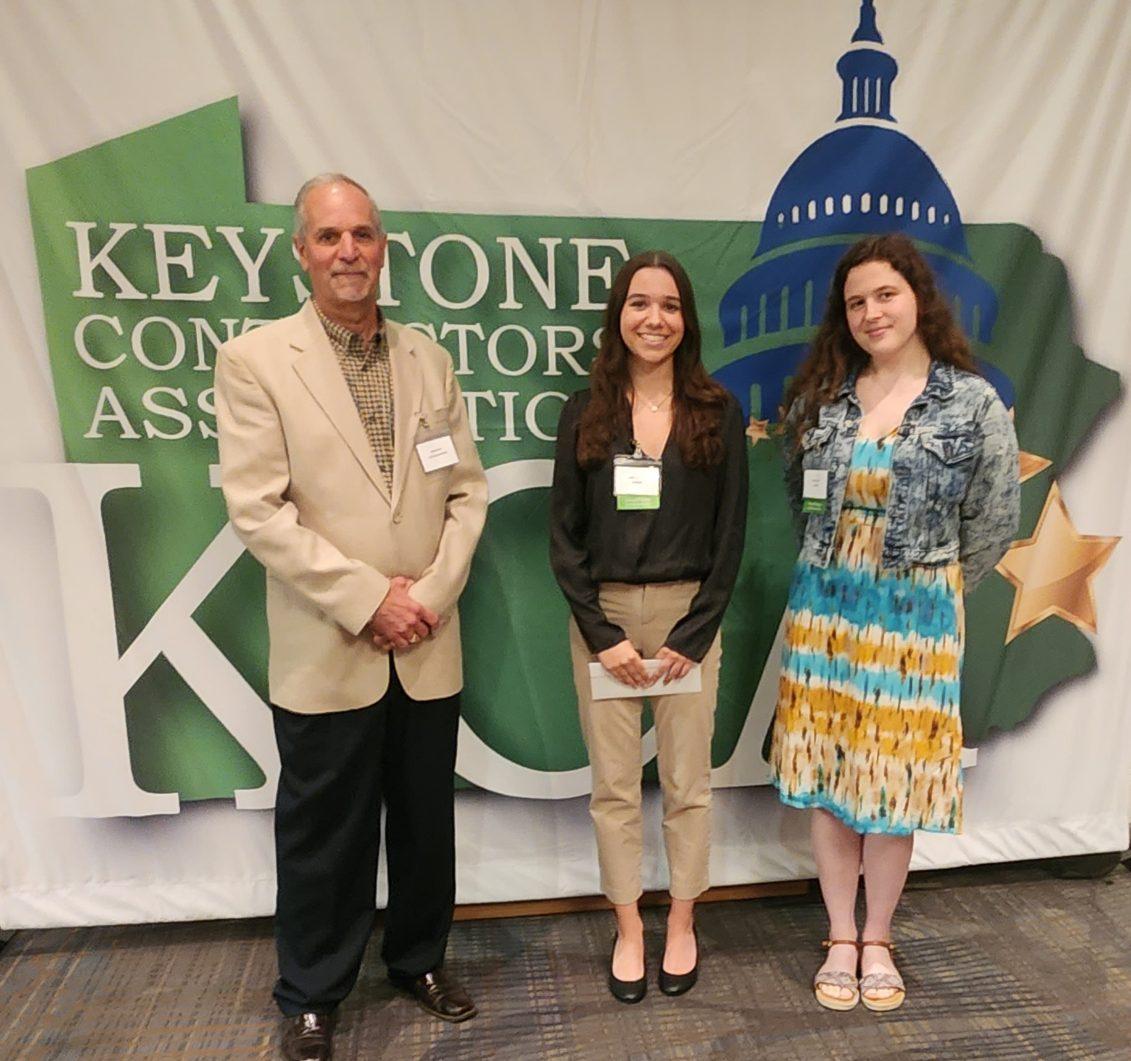
Photo Caption, left to right: James Darr KCA Education Committee Chair, Allison Bromirski and Eliana Roof.

Media Contact: 
Jon O’Brien 
Executive Director 
Keystone Contractors Association 
(717) 731-6272 
Jon@KeystoneContractors.com  

Pennsylvania Construction Weekly Recap – Top Stories for Week Ending August 1, 2025

Here are the top construction stories for Pennsylvania for this week:

Tec Centro Workforce Network’s Call for Skilled Trades Investment: This summer, the Tec Centro Workforce Network, a bilingual workforce development program, emphasized Pennsylvania’s looming shortfall of 300,000 skilled trades workers by 2030. With over 2,200 individuals on waitlists for training, Tec Centro urged $8 million in public and private investment to expand programs in construction and other trades. The initiative highlights the retention of 80% of trained workers in Pennsylvania, strengthening local economies. This story underscores ongoing efforts to scale up construction training programs, critical for projects statewide. READ MORE

Penn State University Construction Projects: Penn State continues to see major construction activity, with projects like the $115 million Osmond North Building (set to complete in January 2027) and renovations at Beaver Stadium, potentially costing up to $700 million. The Susan Welch Liberal Arts Building recently opened, consolidating academic departments. These projects, while ongoing, were highlighted in updates from July 2025, indicating continued progress that could still be relevant. READ MORE

KCA Announces 2025 Scholarship Winners: The Keystone Contractors Association announced its recipients of the 2025 KCA Scholarship Program honoring Allison Bromirski and Eliana Roof. Allison is a junior in Penn State’s Architectural/Engineering Construction Management Program and Eliana recently completed her freshman year at Drexel University in the Construction Management Program. To meet Allison CLICK HERE. To meet Eliana CLICK HERE.

Veterans Leading Veterans

I have been blessed by having many amazing leaders in my life from sports coaches to the Navy Chiefs and Officers and of course my parents too. Today, I am going to share pieces of advice that Veterans learned in the service from other Veterans. I found an online community for Veterans, and I asked what the best piece of advice they received while in the military. I loved the responses.

By the end of the first day there were over 200 comments and after week over 500 comments. There were lots of repeats, some I can’t repeat and some I didn’t quite understand. To my Veteran friends who may not have seen this post online and are just seeing this article now, what is the best piece of advice you received in the military? As for me, well mine is the last one on the list. Check out the list and whether you’re a Veteran or not, let me know what you think.

Enjoy the list.

  • If you’re not 15 minutes early, you’re late. OR It’s better in life to be an hour early than a minute late. (Arriving early was by far the most popular comment received.)
  • Adapt & Overcome!
  • Teamwork! Always!
  • Work hard, play hard.
  • Embrace the suck and succeed despite it.
  • Slow to speak; read the room; know your audience.
  • Ownership creates leadership.
  • It’s easier to say you’re sorry than to beg for permission!
  • Take each day as a new day. Look forward to tomorrow because yesterday is now in the past.
  • My military service provided me with knowledge that I truly can get through anything in life, and that knowledge is now reinforced by my relationship with God as well. Rarely is there a need to truly hit the panic button.
  • One shot, one taken off the game board.
  • Truth is stranger than fiction.
  • Always be the hardest working person in the shop.
  • Be willing to do anything you would ask someone else. If it’s beneath you, it’s beneath everyone else.
  • Treat everyone with kindness and respect.
  • Make your bed every morning!
  • I don’t have to know everything, but I do have to know where to find it.
  • No rules. No excuses. No regrets.
  • Never mistake humor for a lack of intensity.
  • Watch your back but, more importantly, watch out for your people.
  • People only hear 10% of what you say. So repeat yourself 10 times.
  • Mission, Men, Myself! It applies to life beyond the military!
  • Hydrate or die.
  • Just get it DONE! There’s no room or tolerance for failure!
  • You are your habits.
  • Details matter. Safety first.
  • Respect others and remember we all bleed red!
  • Listen and learn in life.
  • Eat fast and get to work.
  • Your body tricks you into quitting. Your mind is more powerful than your body. Don’t give up. Keep pushing forward.
  • Only answer the question asked.
  • Accountability and discipline!!
  • In God we trust, all others we check.
  • Never escalate an issue without a potential solution.
  • Allow stress to drive your focus, not your emotion.
  • Hope is not a plan.
  • On a team, you are only as strong as your weakest link. Help them, don’t hurt them. OR If someone on the team shits their pants, we all wear a shitty diaper.
  • When people say they can’t, 9 out of 10 are really saying they won’t.
  • Respect the Rank, then go ask the Chief. (Meaning respect authority but also know who knows what they’re talking about)
  • F*%# up. Own up. Move on.
  • No matter how bad things are, it can always get worse, so take pleasure during good times.
  • Keep your military bearing you were given in basic training and carry it with you through your life. You will out work and out discipline everyone around you.
  • Lead, follow, or get out of the way.
  • Protect your subordinates and they will make you look good, every time. Respect privacy, but know when something is wrong with your soldier. Personal relationships are invaluable. Be kind when warranted, and when force is necessary, be ruthless.
  • I was taught to make a list of goals for myself every year. I started out slow but I’ve done it since I was 20. The things I have achieved are unbelievable!!
  • Always believe in yourself.
  • What the mind can conceive the body can achieve.
  • Be a doer, not a watcher!
  • Have integrity, show up early, be willing to put in the work when needed, and last but not least the only person that truly cares about you is yourself
  • Can’t means won’t. Never give up.
  • Discipline is mental, not physical.
  • The seven P’s: Proper Prior Planning Prevents Piss Poor Performance.
  • Never get comfortable. Someone out there is trying to kill you.
  • Remember no matter what you think you are replaceable and disposable.
  • Take 5 breaths before you speak!
  • Own it! If you did it, it’s yours.
  • Leaders Eat Last.
  • NAVY… Never Again Volunteer Yourself.

What an awesome list. As for the best advice I received, here’s a quick backstory. I was stationed at Little Creek Naval Base in Norfolk, VA. In 1997 I was awarded the Blue Jacket of the Year. For the ceremony, I was told that one of the top Naval officers was going to present it to me. It turns out that Admiral Douglas Katz was the officer.  On the day of the ceremony my chief tells me that Admiral Katz arrived early and wants to meet me first before giving me the award. During our meeting, he asked about me, my background and goals, then he gave me a life lesson that went something like this:

“Just remember, anyone can just say ‘no’ in life, but when leaders say ‘no’ they need to do it in a way that people will understand and accept. Nothing kills morale faster than when your people bring ideas and are simply told ‘no.’ Whether you stay in the Navy for life or opt for another profession, you will have to deal with people, you will have to lead people and people need guidance. Anyone can just say ‘no’ when asked something, be a leader and make sure your team understands and supports your decision.”  

Let me know what you think.

KCA Magazine Insights Article, Spring 2023

With the NFL Draft upon us, I thought it was an appropriate time to share my attempt to answer the important question that Pennsylvanians ponder: Can a Pittsburgh sports fan like and respect a Philadelphia athlete? Below is the response. This article appears in the Spring 2023 edition of the Keystone Contractor Magazine, to view the entire issue please visit: https://issuu.com/atlasmarketing/docs/the_keystone_magazine_spring_2023_final_issuu_0420?utm_medium=email&utm_source=sharpspring&sslid=MzcxtzQwMjE1MbcwAwA&sseid=MzI1MTUzNzOyNAAA&jobid=8e832794-eea0-4ecd-80ef-31f10ccb9ec3

Insights from the Executive Director

In my life, no two days are the same. I might find myself walking a jobsite talking to the superintendent one day and maybe the next day I’m meeting with a senator to promote workforce recruitment initiatives, then following that I might be speaking to high school seniors about careers in construction. But the one constant, regardless of whom I’m with, it seems like we always spend some time talking about sports. Full disclosure, I’m a sports junkie.  

I see a lot of similarities in business and in sports: strategizing to chase success; overcoming challenges; working as a team. And I think in both sports and business, one can apply lessons learned from one to the other.

In this year’s Super Bowl, there are a few examples that can be applied to construction. The Philadelphia Eagles had one heck of a season and came up a little short in the end. But what can learn from them? One major takeaway for me is that they have a strong leader. Jalen Hurts is one impressive individual. And yes, a Pittsburgh Steelers fan can be impressed by a Philadelphia athlete.

Through Jalen Hurts’ actions and words, he showed how to be accountable for your actions and he placed an emphasis on having a strong culture. He played a lights out, awesome game, with the exception of one play (I won’t rub salt in Eagle fans wounds and discuss the play – you know the play I’m referring to). His response after the game:

“I always hold myself to a very high standard in everything I do. Obviously, I try to control things I can. I touch the ball on every play. I want to protect it. It hurt us. You never know what play it will be. I don’t do this to be loved. I don’t do this to be hated. I don’t do this to seek anybody else’s approval. I do it for all the guys in the locker room. I do it for all the time we invested in this.”

Jalen Hurts demonstrated how a person who is accountable for his actions speaks. This football star realizes and embraces the benefits of a strong culture.  

Appreciating Your Mentors

Last week my dad, my first mentor in life, came across some old papers while he was cleaning out his attic. He gave me something that I had forgotten about, but I’m sure glad he kept it all these years. He found the letter to the editor submission of mine that ran in the Harrisburg Patriot News in 2004.

I was feeling on top of the world in 2004 – I had been married two years and Melody and I were enjoying life. I had a decent job, not the dream job, but it supported us, plus we were expecting our first child. I know I didn’t get to where I am without the many amazing people in my life that went out of their way to mentor me. I started writing to some of them to show them I was thankful for them and to let them know that I was thinking of them.

Around this time, I heard my high school football coach was retiring from teaching so I penned the OpEd you see below. I am so fortunate to have had this run in the newspaper, as my coach’s wife said he was so thrilled to see this. Plus, after it ran on a trip home to visit my parents, I paid him a visit and got a big bearhug from him and we spent the day just hanging out and talking. I was fortunate because Coach Lichtel would pass from prostate cancer a few years after, but like all the times we spent together while I was in high school, memories of him will live on just like the life lessons I learned from him.

Make sure your mentors know that you appreciate them.

Patriot News Letter to the Editor as it was written in 2004:

Coach Licthel, thanks for being a role model

Recently I watched a sentimental tribute to Pat Tillman, the NFL player turned Army Ranger. After viewing the televised program, I had no trouble seeing why all of America is mourning the loss of this fallen soldier. It was evident to me that Tillman became the person he was because of the cast of role models that he was associated with while he was maturing.

After the ESPN special, I searched within myself to see what role models can claim responsibility for how I evolved from a young kid running the streets of Mechanicsburg to a mature father-to-be, enjoying a successful home and career life in Pittsburgh. I found some answers fairly quickly with mom and dad leading the pack, but one name surfaced that I hadn’t thought of for some time – Rich Lichtel.

I had known of Coach Lichtel while attending another high school in the area, but it wasn’t until I transferred to Mechanicsburg High School during the tail end of my sophomore year that I had truly come to know who he was.

He is a role model; he is a mentor; he is an educator; he is a hero; he is a friend. He was all these things to me when I was with him on a daily basis.

He was a man that took the extra time to make sure students – and not just football players – were doing OK. He cared about his profession and that was reflected in the kids that came in contact with him. He didn’t make school a place to go because you had to – all students of Mechanicsburg, no matter what social groupings they fell in, liked Coach Lichtel. He made the time to help those that needed help, whether it was lending an ear when a student had some troubles or cheering up a student when he or she needed to smile. He simply did whatever it took to reach the young minds in the school district of Mechanicsburg.

And, oh yeah, he was also a football coach. During the 1980s Mechanicsburg high school was renowned in high school football as a quarterback factory. The school churned out some good ones like the Hakels and the Abners. Producing quality quarterbacks is certainly no coincidence, since Lichtel himself was a remarkable quarterback in his younger years.

Prior to transferring to Mechanicsburg, one thing that excited me about the move was that I, a high school quarterback at the time, was going to receive football knowledge from a proven quarterback player and coach. But the first thing he wanted to do was to get to know me. He didn’t concentrate on instructing me on how to properly play the position, when what I really needed at the time was someone to make the extra time to be there for me.

Transferring high schools, especially in a situation similar to mine where negative labels were thrown on me, is difficult for kids and he didn’t assume any rumors to be true; instead he took the time to understand me. He cared more about the students of Mechanicsburg than winning games.

So, sure the name Rich Lichtel is associated with Mechanicsburg Wildcat football and rightly so. He won some games and a few league titles. He did alright on Friday nights, but that is only a part of his legacy.

I’m sure all of his compiled wins over the years have his name appearing on some elite coaching list in the central Pennsylvania area, if not the state or country yet something tells me he’s just as proud, if not prouder, knowing that there is a lot of mature adults around this country that have him to thank for being a positive role model in their life. I know I would like to thank him.

So while Rich Lichtel is retiring from teaching, but remember that his teachings will never retire. I, like the rest of his former students, plan to instill the values that he taught naturally on a daily basis to my future child. Generations will benefit from his position as a role model.

Enjoy your retirement, Coach Lichtel! And thanks for being a role model in the Mechanicsburg area.

Life Lessons Are All Around

Recently I was driving with one of my daughters and as we went through the construction road project she says, “dad do you know that guy?” She was asking about the flagger who was directing traffic as we entered the construction zone.

I told her I did not know that individual and how I wave to all flaggers. She responded with, “yeah I know you wave all the time, but that guy smiled when he waved back, and it looked like he knows you.”

After we drove through the jobsite, I went on to explain why I wave to the flaggers: Try putting yourself in someone else’s shoes in life. If you have a job where you see people all day long, would you rather see people who look at you, appreciate your role and give you a friendly smile? Or would you rather encounter people all day long that ignore you?

Every job is important and serves a purpose, that’s why employers pay workers for their efforts. Using the construction flagger as an example, can imagine life without the flaggers – it would be chaos without them, and I appreciate the order and safety they bring to our roadways.  

I didn’t expect to have this discussion with my daughter as we drove to her cheer practice, but I’m glad we took advantage of the moment. Life lessons are all around, just look for the signs and make the most when the opportunity arises.

A Veterans Day Message from the Keystone Contractors Association

This Veterans Day let’s all step up our appreciation for our country’s heroes. It’s a nice gesture when we see a Veteran to say ‘Thank you for your service’ but it doesn’t have to end with that. Ask the Veteran how they’re doing or how they’re day is going or if they’re looking for a civilian career.

As you may know Veterans have one of the highest suicide rates in the country. In the recently released 2022 National Veterans Suicide Prevention Annual Report by the Veteran Affairs, it was reported that in 2020 (the most recent data) 6,146 Veterans took their life. Suicide is now the 12th leading cause of death in America and it continues to hit the Veteran population hard. According to the recent VA report, Pennsylvania was the fifth highest on the list with 240 Veteran Suicides. Our state’s annual number has dropped every year since 2017 when we lost 294 Veterans, but at 240 we have lots of work to do and we’re not moving fast enough as we strive to reach zero.

Finances and lack of purpose could be two reasons why one might contemplate this fatal decision. The construction industry offers family-sustaining careers in both professional and labor positions. Construction professionals take pride in building Pennsylvania and with the strong work ethic Veterans are equipped to be successful in this industry.

This year the KCA, in partnership with our labor allies, went to great lengths to educate organizations and individuals who work with Veterans as they transition from the military to civilian life. The Carpenters and Laborers unions have been excellent stewards of the industry and together we worked with both to talk about the benefits of working in this industry, the type of positions and guidance for entering. We are not done either. For the remainder of this year and for the foreseeable future we plan to continue this outreach. If you are interested in learning how you and your organization can get involved, please let the KCA know.

In closing, this Veterans Day saying ‘Thank you for your service’ is appreciated, but remember you never know what a person is going through by simply looking at them and giving a passerby message. A little conversation can go a long way and can be the best way to show your appreciation.

Building PA Podcast Season 1, Episode 13: Building a Safety Culture at Leibold Inc.

Introduction: When I was hired at the Keystone Contractors Association, I explained how 90% of my construction contacts are Pittsburgh-based and I would welcome being introduced to others in the industry located around Pennsylvania.  KCA Board of Director Dave Jones of Cresswell Brothers was one of the first to offer help: “Hey Jon you should call Clayton Leibold.  He runs an impressive operation and places a strong emphasis on safety.” I’m glad Dave made that suggestion.  Clayton operates Leibold Inc., a mechanical contractor based in Pottsville, PA.  His company is highly respected in the industry due to its reliability, production and excellence in safety.  But how did Leibold come to be a safety-first operation? Listen to this Building PA Podcast interview to find out.


To listen to the entire interview visit: Building a Safety Culture at Leibold Inc.

Jon O’Brien (00:03):

Hello, and welcome to another episode of Building PA Podcast, a construction industry podcast taped and recorded right here in the great state of Pennsylvania for our wonderful construction industry. I am Jon O’Brien from the Keystone Contractors Association.

Chris Martin:

And I’m Chris Martin with Atlas Marketing, and we tell stories for people who build things.

Jon O’Brien:

Awesome. Good stuff. Hello, Chris, how are we doing today?

Chris Martin:

Hey, Jon, how are you doing today? I’m looking forward to our discussion today.

Jon O’Brien:

It should be fun. We’re talking safety today. We have a Clayton Leibold from Leibold Inc.. A fine mechanical contractor based in the great town of Pottsville, Pennsylvania. Hello Clay.

Clayton Leibold (00:47):

Hello. How are you doing today?

Jon O’Brien (00:49):

Good. Doing great. Doing good. Well, you are joining us and we’re going to talk safety. And this is part of our safety podcast series we’re calling, Building a Safety Culture.  Your company has been a member now I believe three years, going on three years at the KCA, which is awesome. And during that time, your company has taken home two of the KCA safety awards for safest subcontractor under 50,000 man hours worked with, this is the important part, with zero injuries. So you’re going on a two year streak here, zero injuries. So who better to speak with concerning safety culture, then an award winning safety contractor that places a strong emphasis in the area safety. So welcome to the podcast. Yeah like I said, we’re gonna talk safety here. So you know, you want to touch on your company and just first off, maybe introduce yourself and your company and then we can kind of delve into the safety topic.

Clayton Leibold (02:07):

Sure, sure. So, as you mentioned my name is Clayton Leibold, the owner and president of Leibold Incorporated. We’re a full mechanical HVAC sheet metal and piping contractor located here in Pottsville, Pennsylvania. We are going on eight years in business. My company has been going to be in business for eight years here, but I personally have been in the construction industry and in the field for going on 24 years as a union pipe fitter. So that’s kinda my background. And then as I mentioned, my company was formed about eight years ago and we, you know, serve as all of, pretty much all of Pennsylvania and surrounding States. And we do, you know, emphasize safety as a very important part and aspect of our job and our day to day activities in, in the field.

Jon O’Brien (03:16):

Now, concerning safety, is something that was kind of instilled in you during your 24 years working in the field prior to starting your company?

Clayton Leibold (03:27):

Yeah, it was early on, I could tell that obviously safety is important in the field and it was kind of brought to our attention on a regular basis and we always strive to do things in the safest manner. As you know, going back 24 years, as it’s starting out as an apprentice, obviously you are learning every day and things and certain incidences come up and hopefully you learn from them and can grow and understand how things work, how and why safety is so important, especially in the construction industry, in our field with so many things that could happen you know, on the job site related to heavy objects, multiple things that can occur that we may or may not have control of.

Clayton Leibold (04:31):

So my foreman, project managers I feel did a good job from early on instilling the simple fact that safety is so important. And if you want to continue to do your job, be healthy and continue to be able to do the job that you’re wanting to do it in the proper correct manner. And just be aware of your surroundings and always have it on your mind and kinda remain, not get too laid back in your day to day activities.

Chris Martin (05:13):

Clayton with your experience and clearly you have some amazing experiences leading into this, but what do you see as the biggest challenge for not only the safety industry, but more importantly, the construction industry as it relates to safety?

Clayton Leibold (05:31):

Probably maybe overcoming the jobsite hurdles, the things that are constantly brought up and in the day to day active daily activities of being on site, your timelines are getting shorter and shorter. Things are being accelerated, whether whatever the reason maybe, but I think we all have to keep in mind that can’t compromise the safety of how the job is getting done. And the manner that you do it. So I would say the more recent trend maybe of trying to do as much work as possible in a very short timeframe you know, we just can’t, we can look past or beyond the fact of just doing it in a safe manner.

Chris Martin (06:30):

You know, the construction industry has a, we’ve been talking about it with clients on our end. And I know Jon and I have spoken about it multiple times, and that is a worker shortage. Are you finding that in the safety industry as well? Are you having a hard time finding qualified safety professionals?

Clayton Leibold (06:53):

You know not as hard as someone may think. It is I guess the fact that the construction industry is experiencing a shortage in some fields with us being a union mechanical construction company, we have a good source for competent well-trained individuals up and coming through our apprenticeship programs. So the good key individuals are there to be found. And we’ve had good luck with taking some key employees – foreman, project managers – and kind of molding them into good safety individuals. So, you know, it kind of worked out real well good for us because I feel they’re the best and most competent because we’re taking their field expertise and knowledge and just fine tuning that and molding them into a good safety individual to lead and lay the foundation for the rest of our company as far as the safety program goes

Jon O’Brien (08:17):

And concerning new hires. And when you bring someone on new, either in the field or a project manager is onboarding a challenge at all, as far as making sure that these new hires also believe in safety and they buy into the safety cultures. Is that a challenge at all with new people?

Clayton Leibold (08:40):

Yeah, it can be especially maybe the younger generation or someone that’s not had the experience of being in the field, seeing examples of how safety is so important and possibly not experiencing near misses or smaller accidents that might catch their attention. If they don’t have that knowledge and if they’re coming from a field or something, or straight out of maybe, you know college or high school that just don’t have the experience it is harder, but we just have to take the time to educate them and give them the proper paperwork, the information the protocol of how we operate as a company. And we just have to make sure they understand it and abide by it because it’s not going to be taken lightly. And that’s what I would expect from all my employees. So it’s something that needs to be done and done correctly, or it’s just not going to work out.

Jon O’Brien (09:55):

Yeah. And I’m getting to know your company more and more, you know, we’re a few hours apart, but I’m getting to know your company more. And it seems as though there’s a buy-in amongst your foreman and your top people in the field and in the office on safety, and I’m sure that’s extremely helpful when it comes to onboarding. Do you have any advice to other companies, like how do you get the buy-in or I don’t know if you can touch on that a little bit.

Clayton Leibold (10:23):

Sure, sure. It is difficult at times to make sure that everybody is buying in. It’s important to have the top guys in our safety program leading by example showing that their fellow employees have someone to take after, or look up to, or just bounce questions off of, or conditions of a job site maybe, or someone there to offer some advice or guidance if they would have questions. But as long as they’re there leading by example, getting the rest of the crews to buy in and understand, that’s a way of doing business, that’s the way that I want the culture of the company to be like. And you know, they’re there to make a point that we’re going to discuss safety on a weekly, even daily basis.

Clayton Leibold (11:28):

And that’s what is expected and it is gonna have to happen. And if you just keep driving home that point eventually they believe that it does make sense. And there is proof that it works obviously we’re winning some safety awards and are zero injuries in the field speaks to that so if they see the results and as the results are compounding and building we are on a, knock on wood, a pretty good streak here of not having any work injuries in over three years. So they see the results. And I think it’s easier for them to buy in and accept it as a way of the daily routine.

Chris Martin (12:30):

Yeah. It’s obviously no accident in three years. That’s a great run. And obviously the buy in is there. Also maybe touch on outside resources? I mean, do you reach outside the company to help with maybe training at all? You mentioned the unions, are they helpful at all?

Clayton Leibold (12:50):

Yeah. Yep. They’re very helpful. We belong to a couple different associations, similar to Keystone Contractors Association. We affiliated with SMACNA Sheet Metal Contractors Association, also the MCAA, the Mechanical Contractors Association, and they do offer a wealth of continued education, safety seminars, conferences you know on a regular basis. So we do lean towards them with providing additional valuable tools such as the toolbox talks, the guidelines, some additional safety information that we can implement and add to our portfolio. It cannot hurt to have too much information. You don’t want to keep repeating certain things or harp on certain conditions or aspects. It’s always good to mix it up a bit.

Jon O’Brien (13:58):

Do you have any advice, maybe you’d like to share with a young entrepreneur that wants to start out in industry advice, safety related obviously. There’s various pieces of advice you can give someone, but when it comes to starting a construction company, anything you’d like to share

Clayton Leibold (14:21):

I would say there’s no real, no good example where taking a shortcut in safety, whether it’s your employee, yourself, your fellow employees, or your coworkers, there’s no good reason to do any shortcuts that would compromise the safety of anyone. It would really benefit anyone and would certainly do more harm than good by possibly causing accidents. Whether, like I said, to yourself or to others just for the simple reason that it might be quicker to do a certain task, one way that may be a little bit more unsafe or whatever the reason may be. I just wouldn’t recommend any shortcuts or trying to compromise doing something in a safe way. I actually have had the experience where I had to make a tough call and tell my guys to pull off of a job just for the sole reason that it was unsafe. And it wasn’t a popular decision. The customer was not happy, but in the long run, after further explanation from my point of view, he understood it and ultimately was okay with it and then thanked me. So that’s just a brief example of doing something correctly to not compromise potentially unsafe condition.

Chris Martin (16:11):

Clayton, that’s a great example of safety first, not only for your company, for your employees, but also for the client and the fact that the client came back and said, thank you, hats off to you for that, because that just doesn’t happen that often. But, but my question to you is do you find that a lot of your clients aren’t really focused on safety?

Clayton Leibold (16:38):

You know, honestly I don’t, we don’t. We are finding even more and more of our customers and clients are gearing up and leaning more towards a much safer environment, working environment and job site conditions and working conditions and doing the certain tasks that we were hired to do in the most safe, the safest manner possible. So maybe it’s cause we have some pretty good customers and clients, but I do feel.

Clayton Leibold (17:12):

We definitely work in some very sensitive facilities where that the unsafe type of work is just not tolerated. So we can’t afford to do anything but the job, but do the job safely because we just won’t be working there any longer. So I’ve found that the more, I can honestly say most of our customers and clients expect us and hold us to a very high safety standard. And that’s probably one of the main reasons we continue to be safe is we, we also have that in the back of our minds that if we don’t do this the right way, we may not be working here, not only for my company, but at that facility anyway.

Jon O’Brien (18:06):

Right, right. And I think too, you know, to your point that the entire industry has obviously put a huge emphasis on safety over the last 20 to 30 years, at least, we’ve even seen it with our clients you know, working with trade unions and, and contractors that we go on photo shoots and we know we can’t take photography or video of certain elements because there has to be a certain safety functionality to it. If not, it shows the wrong story or gives the wrong message if you will. So I think you’re right. It’s a balance of everybody understanding how important safety is to move the industry forward and get out of the typical thoughts and perception of the industry itself. So I’m glad to hear that from both you and your company and your clients. That’s great. That’s great. Right? Yep. Kinda done a lot to me. We touched on a lot here today, Chris, any other questions or comments or to say Clayton thank you. This has been really enlightening. And hopefully we can ask you back in the future and we can talk more about safety as it relates, not only to your company, but talk a little bit more about your company in general too.

Clayton Leibold (19:29):

Sure. Sounds good. I appreciate the time that we’re able to take in and continue to shed some light on a safety culture within the skilled trades sector and of the construction industry, and I’m happy to happy to help.

Jon O’Brien (19:52):

Absolutely. And you have been an award winning contractor. Of course, we’d like to have you back on, but I got to have one request. If we have you back in the future, we have to record it at your company. Chris, you have to see the farm. He has goats, horses. I believe you have horses and pigs and you name it. I love it.

Clayton Leibold (20:18):

Sure. We’re happy to show some folks around when we have visitors. We just had a baby donkey last week. So she’s she’s pretty darn cute. So she’s hanging around here, she’s always fun to hang around with. So it works out pretty well. Yeah.

Chris Martin (20:36):

Well, yeah, I’m there, man. I have to say, I don’t think I’ve ever seen a baby donkey, so that’ll be interesting.

Clayton Leibold (20:46):

Sure, absolutely.

Chris Martin (20:48):

All the stuff we talk about here. It’s not just about construction, right. It’s awesome.

Jon O’Brien (20:53):

Yeah.

Chris Martin (20:54):

Very cool. Yeah. Well, thank you for your time here. This is an excellent conversation and we look forward to seeing the baby donkey.

Clayton Leibold (21:05):

That sounds good. Anytime. Thanks for having me.

Building PA Podcast 2020 Year In Review

The Building PA Podcast made it to the 2020 finish line. The Keystone Contractors Association enjoyed working with Atlas Marketing in this endeavor as we talk construction with Pennsylvania’s construction professionals. Afterall, it was the guests who were the true stars of this podcast and we thank each and every guest we’ve had on the show. In 2021 and beyond, we look forward to getting more of you to join the conversation!

For more information on the Building PA Podcast, please visit: https://buildingpapodcast.com/

Building PA Podcast Shareable 2020 Fun Facts

Building PA Podcast published 46 episodes in 2020. The first was Business of Construction – Crisis communications published April 03 and the last was How Drone Technology is Impacting the Construction Industry published December 14. Did we improve this year? (Tweet)

In 2020, the most popular episode of Building PA Podcast was Apprenticeship Training – Sheet Metal Workers, published April 05 and downloaded 208 times. What was your favorite episode? (Tweet)

In 2020, Building PA Podcast was downloaded 902 times from Harrisburg, Pennsylvania; our most popular city! Where do you listen from? (Tweet)

In 2020, fans of Building PA Podcast listened most using Apple Podcasts, iHeartRadio, and Your Buzzsprout Site apps. What’s your favorite app for listening to podcasts? (Tweet)

In 2020, Building PA Podcast published 46 episodes totaling about 21 hours of content. That’s about 1,250 minutes or 75,018 seconds for your listening pleasure. What was your favorite episode?(Tweet)

Building PA Podcast Season 1, Episode 12: The Joys of Being a Small Business Owner in the Construction Industry

Introduction: I don’t know if jealousy is the word to describe it. Nah that’s not the right word to describe it. I think it’s admiration – yeah that’s it. I admire business owners, especially the ones who started from scratch. I love when we interview business owners on the Building PA Podcast so we can hear about their launch, the challenges they faced and how they overcame those challenges. My co-host Chris Martin is a fellow business owner and I think it’s awesome when he interacts and shares experiences with our entrepreneur guests. Here’s a transcript of a podcast interview of Sandra Palone. Checkout her story, it’s a good one. I hope it inspires future entrepreneurs.

To listen to the entire interview visit: The Joys of Being a Small Business Owner in the Construction Industry.

Jon O’Brien (00:00):

Hello, and welcome to another episode of Building Pennsylvania, a construction podcast for Pennsylvania’s construction industry. I am Jon O’Brien from the Keystone Contractors Association.

Chris Martin:

And this is Chris Martin with Atlas Marketing.

Jon O’Brien:

Hello, Chris, how are we doing today?

Chris Martin:

Oh, I’m doing well, Jon. Hopefully little technical challenges aren’t going to screw us up, but hey, we’re doing really well.

Jon O’Brien:

Yes we are. And let’s hope. Yeah. Let’s hope there’s no issues. We have a great, great guest today. We have Sandra Palone from Palone and Associates. Hello, Sandra.

Sandra Palone (00:39):

Hi. And if I may Sandra Palone and Associates.

Jon O’Brien (00:44):

Oh, I’m sorry. Oh, okay. You got it. Sorry about that mistake. Welcome. And today we want to talk about a woman owned companies in the industry and you know, you’ve been around a few years. Well, you know, instead of me, why don’t you just give us a little history on your company and get us up to date on your company?

Sandra Palone (01:07):

Sure. Let’s see. I’m going to try to keep this brief. I opened the doors of Sandra Palone and Associates in 2015. So we’re about four and a half now. It’s been an interesting ride. I started the company as mainly a manufacturer’s representative for specialty precast concrete items and construction. That’s my background and I have grown into also now supplying of precast products, certain kinds. And I also do some consultation if you will. Whether it’s in the form of doing onsite representation for manufacturers of precast or other types of materials now. But that’s where we’ve gone from. We’ve gone from being a rep to a rep and a supplier and also to some consulting,

Jon O’Brien (02:10):

Pretty amazing four and a half years, time flies.

Sandra Palone (02:15):

It feels like it flies. And then it feels sometimes like it’s going very slowly. But it’s been really, really interesting.

Jon O’Brien (02:26):

And your market, is it public or private and what kind of your territory as far as what bridges do you cover?

Sandra Palone (02:34):

So my primary market is Pennsylvania. So quite honestly whether it’s Western Pennsylvania, center of the State or in the Eastern part, all over Pennsylvania, mid Atlantic overall, I would say that my secondary state is Maryland at this time. And those are the two areas where I have my WBE women business enterprise certifications as well. So I spend a fair amount of time in the public sector, as well as in commercial construction.

Jon O’Brien (03:17):

And concerning the certification, the WBE certification. You said two States, so Pennsylvania and Maryland, any lessons learned you’d like to pass on the future company owners or is that, or are we not have enough time for that?

Sandra Palone (03:35):

Well I will say this if I believe that the women business enterprise or the, what they call the disadvantaged is what it’s currently called. It’s kind of a bit of a umbrella term disadvantaged business enterprise, otherwise known as DBE. I think that these particular types of agencies and certifications are doing a really good work, trying to get people like myself involved in projects and whether that’s for a PennDOT project or whether it’s for a transit project. These agencies do a very good job of trying to do that. I will say that it is not an easy process getting certified. It’s not showing up and saying, Hey, I’m a woman. Gosh, I’d really like a certification. And that would be nice if it doesn’t work that way. It’s a very tedious process that is based off of mostly your financials and to show that you have financial control of your company. So I would say, go for it just don’t be daunted by the paperwork.

Chris Martin (04:55):

I’ve heard that too. And especially in the, you know, the marketing and advertising industry are there. It’s, I mean, obviously it’s the same across the board, but there’s a lot of there’s a lot of call for minority and women owned businesses, but Sandra, you mentioned working agencies, can you help our listeners understand what agencies you work with and what that means?

Sandra Palone (05:19):

So there are agencies that do, what’s called a, like a third party certification, and this is in a sense, like an independent certification process. And so what that means is instead of self-certifying, for instance, going to the state website and saying, I’m a woman own business click, it’s its own entity. If you will, these agencies, these third parties, and they actually have yes, a sort of a federal guideline as to what type information that they ask from you in order to determine your status. But they also have a component of an onsite audit to ensure that you are who you say you are and be that you do what you say you do. So that is all a part of it. And so one of the agencies that I am certified with that this called the Pennsylvania Unification Certification. I said that wrong. So I’m going to repeat it is the Pennsylvania Unified Certification Program PUCP and under that umbrella, is Southeastern Pennsylvania Transport Authority and a host of other government agencies such as in my area, Allegheny County.

Chris Martin (06:57):

Okay. So, as you’re working with these agencies, obviously setting and establishing your women business owned company, are you seeing advantages from that or are you running into more challenges?

Sandra Palone (07:15):

Both. and I’ll describe what I’m talking about. The nice thing about it is, it opens the door for me to bid on all kinds of projects. As I said, whether it’s a PennDOT project perhaps it’s something with a County, maybe it’s the turnpike or, or SEPTA. As I mentioned earlier, it gives me that opportunity to do that in order to meet certain goals that the general contractors normally have to meet the set asides, is that there’s a stigma out there. And difficulty, sometimes general contractors have with their own kind of qualification of people like myself to ensure that they are going to get an, one quality supplier to make sure that it’s not just someone who’s going to be a pass through. And so that’s where I think the real work is for a company like myself to differentiate myself. Sometimes they have to give me a shot in order to see what I can do for them. And what I have available to them is really my ability to service them as much as possible any opportunity I can to make their jobs a little easier. That’s how I distinguish myself. So, and that’s also how I break some of the stigma of what any woman business or a disadvantage business do.

Jon O’Brien (08:57):

Have you been involved at all with any of the DGS, the Department of General Services, any of their Best Value projects?

Sandra Palone (09:05):

Well, I’m working towards one now. We’ll see how it turns out. There is a DNA test lab that has recently been bid in Greensburg, Pennsylvania. That’s a DGS project. The types of projects that I go after, don’t always fall under DGS were the ones that I look for, but I do keep my eyes out for them.

Jon O’Brien (09:38):

Yeah. So over the past, you know, 15 years DGS has been using Best Value Contracting and, you know, to applaud them, they’ve been reaching out to stakeholders and various construction associations and various DBEs and general contractors, and they, I think they really want to get it right. When it comes to DBE and the bidding of a project, there have been, you know, quite a few black eyes with a lot of pass throughs, you know, assisting, you know, various contractors and getting work. And I think they’re on the on the right road to correcting these issues. I was just wondering if you’ve been involved in any of these peer groups or any of these feedback sessions that DGS claims to be holding them, they claim to be holding these events around the state.

Sandra Palone (10:32):

I have to say I haven’t been a part of that, but I do have an opinion and my opinion is that if it, the one way the great equalizer, you know, the common denominator, the way that things are checked seems to be through amounts of money on a project. So if you have a hundred dollar project and you need $12 of it to be with a woman own business, the easiest way to calculate that is to say, well, I’m buying $12 from this company therefore check the box. It’s just an easy way to do it. I personally think that beyond offering a product, which tends to push towards this pass-through scenario that they should look more for companies to offer an expertise in the form of say, if you want to call it consulting great.

Sandra Palone (11:40):

And what I’m getting at is whether it be onsite representation. As I started out saying, I started my business as a manufacturer’s rep, and you could take that through a project. If you know what you’re doing you could take your expertise and understanding of product and offering your service, if you will, as a value, add to a contractor whether it be in the form of really good communication to make sure that anticipate a problem that you might see down the road and take care of it before it happens ways to increase the quality of a project which also reduces the risk on a project for the contractor, finding ways to reduce risk. I can’t think of a better way to add value to a project than to help a contractor reduce their exposure. So that’s my opinion. Okay.

Chris Martin (12:53):

And Sandra is risk exposure, is that something that you offer in your consultation side of your business?

Sandra Palone (13:00):

That is what I market that I am available to work on projects in when I’m staying in my lane of understanding exactly the product and how it can help. I try to at least stay in my lane on that in my specialties as much as possible. But I do offer it and I find that some people say, huh, well, I don’t know if we need that. I mean, we have our project managers and these people have their project managers and I say, yeah, that’s true. I get it. But do you still have headaches? Do you still have issues with getting product? Do you still have when the product comes? Is there something not right. You know, I like to see myself as a bit of a conduit, someone who can help the contractor get the product that they need when they need it.

Sandra Palone (13:54):

And it’s just the part of my stamping on a project that Sandra Palona Associates was here. This product worked out really great. We’re really happy with it. It’s not an easy sell, but most, I think new ideas, if you will aren’t, they’re not easy sells, they’re a bit of an uphill climb. It is something that I continue to offer though, as a DBE, when I’m reselling, that’s what they’re getting, they’re buying that they may be buying a bit of a markup. But the markup is me making sure that’s what the value add is.

Chris Martin (14:35):

Okay. So you’re, you’re focused heavily on customer service and to that point, yeah. To that point, customer service is kind of one of those non-entities, if you will of the construction industry. So can you talk a little bit about how that customer service approach, as it relates to the construction industry is really beneficial.

Sandra Palone (15:03):

So if I am offering architectural precast to a Mason on a project and he calls and he says, Hey, there were supposed to be a 10 pallets, we got nine. Is he calling the manufacturer? No, he’s calling me, he’s calling me. And he’s saying, what’s going on with us? That’s when I go to work and do what I’ve got to do. So that’s what I’m trying to build. I’m trying to build some trust that I’m a seamless part of their operation, that I’m just another person on their team. And I’m the one they’re going to call for the product that they have come to me for. So regardless if everything’s great, and if everything’s so, so, or if there’s a hiccup, that’s what I think really helps. And here’s how you can tell if it works, do they call you again to quote something else and to work on another project that they have? That’s really the best way to measure if you’ve done a good job, in my opinion. And that’s where I operate from this sort of lather rinse, repeat type of mentality based off a service. So it is a non-tangible right? You can’t, it’s something you can’t say. Well, that value was worth is sort of that, but it is something that every project needs

Jon O’Brien (16:36):

Definitely. Yeah. Customer service is very important and definitely helps on future projects. But if you don’t mind, can we maybe travel back a little bit? Can we go back four and a half years? So was there a moment that like, you know what, I should start my own business and also along those lines where you’re fortunate or where you’re able to have any sort of mentors or coaches to kind of help you along. So take me back to 2016, what’s it like?

Sandra Palone (17:09):

Yeah, it’s a little scary. Yeah. 2016, you know, I’ll say this for those who just take a plunge into working for yourself, it may help to remain a teeny bit naive and extremely optimistic which is exactly what I had done. I didn’t have a whole lot going on at the time and early 2016. So let me just give a shout out as to what happened. And I have a mentor. Her name is Laura Kirkoff. I worked for Laura at my first precast plant known as Casscron Stone in Saxonburg, Pennsylvania area. She’s the one who taught me everything about precast. She’s the one who taught me about attention to detail. She was the first woman own business that I ever worked for. They’re third generation family owned business. And she was the best mentor a person could have.

Sandra Palone (18:14):

She was respected by architects, engineers, and by contractors, which is not an easy feat. I’ll say that. So kudos to Laura. Luckily I do represent her product line and it’s excellent stuff today. So I stay in touch. You remember the recession that happened and Castcon Stone was a precaster manufacturer. We were extremely specialized in the type of precast that we did. And the recession when it came along, there was very little vertical construction being built and being that we made 99% of what we did at that time was precast stairs. And we sold to precast garage producers. So there wasn’t a whole lot of that business going on. So we had some pretty slow years where we were trying to pick up the pieces and find other things to quote, and everybody was trying to quote the same work and there really wasn’t much to be had.

Sandra Palone (19:24):

So we basically scraped by for a long while. And at the end of my tenure there, I was went from a salary employee to a full time commission employee because you know, we didn’t really have enough work to pay everybody a paycheck. So if I sold something I’d make money and I thought these people have taken care of me, I’m going to, you know, I’m going to invest myself into these guys getting back to where to where that they worked. And so we did that problem was in 2011. The bills came due and over the course of that time, even though we were making money again, and the business, the economy had increased, you know, the bills became due and the company went bankrupt and it was a real shocker. So I was one of the statistics along with everybody else that I worked with including Laura, who lost their job.

Sandra Palone (20:34):

And so I, like a lot of other people, were thinking, what am I going to do now? It was still not the best market. And I went out to several other precast companies and interviewed and had a couple of offers. And I waited and me and a couple of my other colleagues helped reopen the plant when it was bought by another company. And I’m really glad I did that. So I got the experience of knowing what that’s like to kind of reopen something that was shut down. It was difficult to gain the trust back of our initial customers, but we were able to do it. Something had happened to me though in that timeframe. And I didn’t quite understand what it was is this little boy saying, I’m not sure if I’m supposed to be here.

Sandra Palone (21:33):

Even though we had hired back many of the same old people I just didn’t feel I was part of the culture of the larger company. And I decided to take another opportunity with a small civil engineering firm not too far away that also did land surveying. And I got to learn what it is to be on the front end of projects that are being designed from the site, whether it be a PennDOT type project or whether it be a commercial project. So it was great experience, but again, I felt, I don’t know what I’m doing if I’m going to be here full time. I just and what I mean by that is, I don’t know if I’m going to stick around. I just had this little thing in the back of my mind. And so in 2015 you know, like I applied for my EIN and basically packed up my stuff without a whole lot of commitment from companies to rep and said, I’m going to give this a shot. And that’s what I did. I took a plunge from a perfectly good paying job and decided to go into poverty for a little while

Sandra Palone (22:54):

Just to try it out. And at first it was really exhilarating, but it got a little scary going, wow. Now I did that. I left a paying job in order to work on my own. So it really instilled in me, I’ve got to do it now, now’s the time. And I was 50 and at the time, I was 50 and I figured if I’m going to do it, now’s the time. So that’s what I did. And so with the manufacturing representation, I figured I could rep for a few of these companies. And I mean, I don’t have the money to build my own precast plants, very expensive. So it would be kind of a nice way for me to get back into the industry. And I know I could make an impact.

Jon O’Brien (23:41):

A few years later and look at you,

Sandra Palone (23:50):

Go ahead.

Jon O’Brien (23:51):

I was getting ready to say that that it has, have kind of turned them. So are you mentoring instead of seeking for advice? Are you helping out other people?

Sandra Palone (24:01):

I do help out a few people and I do still have mentors. Laura has been a great mentor over the years but I do have other people in my life that mentor me and other entrepreneurs that sort of took the splash around the same time when we get together. When we talk about Hey, this is happening for me. Is this happening for you? So it’s really, really great to be able to do that. I, you know, and certainly I take a course here and there in order to do a combination of networking and also learning. And what I mean is places like UPMC University of Pittsburgh Medical Center will have construction management seminars that they offer. So it’s an opportunity to network, but it’s also an opportunity to learn how they expect a company like mine to work with them.

Chris Martin (25:16):

Well, it sounds like you’re just continuously learning and moving forward, so kudos to you for that. That’s fantastic. And obviously, you know, in a predominantly male dominated industry, it sounds like you’re making headway and moving things along. So congratulations.

Sandra Palone (25:35):

Thank you. I appreciate that.

Chris Martin (25:37):

And I know how much fun it is to start off on your own. I started my own business about 11 years ago and then a lot of sleepless nights. I know that feeling.

Sandra Palone (25:51):

Times I joke and I say, gosh, you know who’s the boss around here. And then I have to point the finger back at me. Good. If there’s any problems they’re mind to solve there, can’t deflect. So there are times though that I’d really like to deflect, but I don’t have that luxury right now. So yeah.

Jon O’Brien (26:18):

I too, just want to echo Chris, you know, she’s doing a great job and to be commended and, you know, just glad to know you and thank you. Yeah. Any other like major lessons learned you’d like to share with our audience, anyone that they’re thinking of taking the plunge and starting their own company, any, anything major you’d like to talk about?

Sandra Palone (26:40):

I would just like to say that don’t have the regret of not doing it. I am so grateful that I finally took the plunge and it’s a self-employment. And just to get out there and put my name out there, sometimes it’s a little scary at first, you put your own name on the company and you do that because you want people to know that the buck stops with you. When you first start out, sometimes there’s a sense of imposter syndrome, like, Oh, who am I to be telling, you know, these people, how I can help them. And then you get over it because you get hungry and you realize that you have to take all these steps in order to prove this. And I would say do it because not doing it is you’d regret it. I know that I would regret this.

Sandra Palone (27:35):

If I didn’t do it, what’s the worst thing that could happen. I could fail. Okay. But at least I had tried it and somebody liked me. I would regret not trying it. So I say do it. And I also say that if there’s an opportunity to work on a bigger project than what you’re used to working on talk to your mentors and basically work up the confidence and pursue it, just do it. I went from working on my very first project was a $6,500 project. And I had to beg that person to give me that work just so that I could get it. And my largest contract to date is $1.2 million. So we’ve gone from $6,500 to $1.2 million. So I say, go for it.

Jon O’Brien (28:28):

Bravo. Yeah, that’s awesome. And you know, I’m a supporter, a fan of yours and if you ever need anything, you know, think of, think of KCA. We’re always here to help when DGS reaches out, like I said, from time to time for feedback during the bidding process. And if you ever have any input you want me to pass on, you know, just, just let me know. And we’re here to help.

Sandra Palone (28:54):

Thank you. And Jon, I want to say this about the KCA. You guys have been great to me, and I appreciate that very much. And I want to say that those safety talks that you send I use those as an onsite representative for UPMC with the contract, a company I worked with every morning as a safety meeting. I want you to know that those went to good use.

Jon O’Brien (29:21):

Awesome. That’s always great to hear. I always wonder if people actually opened them on Monday morning. It’s always good to hear that. So thank you, Sandra. Oh, no. It’s like, yeah, thanks. I’ll make sure to pass that good word on to the staff.

Sandra Palone (29:43):

They’re worth it.

Chris Martin (29:45):

That’s good. Well, Sandra, thank you so much for joining us and sharing your insight. It was great to hear from you and most importantly as a listener download more episodes, more coming reach out to Sandra. And in fact, Sandra, how can that happen? Somebody to get a hold of you?

Sandra Palone (30:11):

So you can call me, you can call Sandra Palone and Associates. You can call me at (412) 965-0069, or you can email at slp@sandrapalone.net. And if you would like to see what I do feel free to look at www.sandrapalone.net.

Chris Martin (30:37):

Perfect. Perfect. Well, thank you. Thanks for joining us on the Building PA podcast. And as I mentioned before, there’s going to be a lot more episodes coming. So make sure you download and share with your colleagues in the office and thank you for joining us today. Thank you. And all the best to you this year and beyond. So keep it up.

Sandra Palone (31:04):

Thank you. Take care.

Jon O’Brien (31:06):

Alright. See ya.