Pennsylvania Weekly Construction Recap – Top Stories for Week Ending August 8, 2025

Here are the top construction stories in Pennsylvania this week:

Pennsylvania is BOOMING: Pennsylvania’s construction sector is active, with $34 billion contributed to the state’s GDP in 2024 and 31,000 construction establishments. Projects like those in Pittsburgh and statewide infrastructure improvements (e.g., PennDOT’s 684 bridge projects in 2023) indicate robust activity. READ MORE.

Major Work on I-95 In Philly: Overhead sign structure installation will close I-95 North at night August 11-14 in Center City, with ongoing inlet repairs weekdays August 1-29 on I-95 North near Academy Road in Northeast Philadelphia. This represents one of the most significant traffic-impacting construction projects currently underway in the state. READ MORE.

Windfarm Upgrades Help with AI Data Center Growth: Exus recently secured over $158 million to boost capacity at the Twin Ridges wind farm in Somerset County—raising its output by around 30% to 170 MW—and to upgrade the Patton wind farm in Cambria County. These enhancements aim to meet skyrocketing energy demands from AI data centers across the state. READ MORE.

Stay Safe, Stay Informed & Keep Building Pennsylvania!

Pennsylvania Construction Weekly Recap – Top Stories for Week Ending August 1, 2025

Here are the top construction stories for Pennsylvania for this week:

Tec Centro Workforce Network’s Call for Skilled Trades Investment: This summer, the Tec Centro Workforce Network, a bilingual workforce development program, emphasized Pennsylvania’s looming shortfall of 300,000 skilled trades workers by 2030. With over 2,200 individuals on waitlists for training, Tec Centro urged $8 million in public and private investment to expand programs in construction and other trades. The initiative highlights the retention of 80% of trained workers in Pennsylvania, strengthening local economies. This story underscores ongoing efforts to scale up construction training programs, critical for projects statewide. READ MORE

Penn State University Construction Projects: Penn State continues to see major construction activity, with projects like the $115 million Osmond North Building (set to complete in January 2027) and renovations at Beaver Stadium, potentially costing up to $700 million. The Susan Welch Liberal Arts Building recently opened, consolidating academic departments. These projects, while ongoing, were highlighted in updates from July 2025, indicating continued progress that could still be relevant. READ MORE

KCA Announces 2025 Scholarship Winners: The Keystone Contractors Association announced its recipients of the 2025 KCA Scholarship Program honoring Allison Bromirski and Eliana Roof. Allison is a junior in Penn State’s Architectural/Engineering Construction Management Program and Eliana recently completed her freshman year at Drexel University in the Construction Management Program. To meet Allison CLICK HERE. To meet Eliana CLICK HERE.

Pennsylvania Construction Weekly Recap – Top Stories for Week Ending July 25, 2025

Here are the top construction news stories across Pennsylvania for the week ending July 25, 2025:

  • Penn State University Construction Projects: Penn State continues to advance multiple transformative construction projects across its campus, including the recently completed Susan Welch Liberal Arts Building, the ongoing $115 million Osmond North Building (set for completion in January 2027), and renovations at Beaver Stadium, which could cost up to $700 million. These projects aim to enhance academic facilities, student housing, and athletic complexes, aligning with Penn State’s broader goals to improve campus life and infrastructure. READ MORE
  • Pennsylvania Budget Talks Stall Over Road & Bridge Funding: As the legislature works on the state budget, transportation funding has become a sticking point. Republicans are demanding substantial funding for roads and bridges—including up to $500 million in debt financing—while also resisting increases in public transit funding proposed by Governor Shapiro. This impasse has significant implications for the future of construction planning across the state. READ MORE
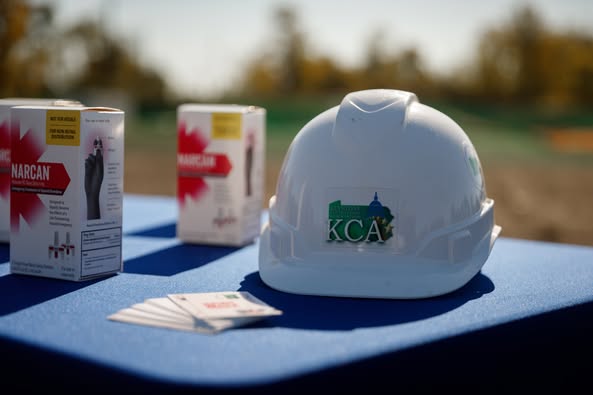
    • Pennsylvania Senate Designates “Construction Opioid Awareness Week”: The Pennsylvania Senate has officially designated the week of July 21-25, 2025, as “Construction Opioid Awareness Week” through Senate Resolution 133. READ MORE

    Stay safe, stay informed and keep building Pennsylvania strong!

    The Impacts of an Inefficient, Cumbersome Law

    The following article first appeared in the Keystone Contractor Magazine’s Spring 2023 edition. To view the entire issue visit: https://issuu.com/atlasmarketing/docs/the_keystone_magazine_spring_2023_final_issuu_0420?utm_medium=email&utm_source=sharpspring&sslid=MzcxtzQwMjE1MbcwAwA&sseid=MzI1MTUzNzOyNAAA&jobid=8e832794-eea0-4ecd-80ef-31f10ccb9ec3

    The Impacts of an Inefficient, Cumbersome Law

    The Separations Act – Wasting Tax Dollars Since May 1, 1913

    By Jon O’Brien

    President Theodore Roosevelt was among the admirers of Pennsylvania’s new Capitol building at the dedication ceremony on Oct. 4, 1906.

    “This is the handsomest State Capitol I ever saw,” the president said as he entered.

    While it was a magnificent building, the project was way over budget – three times more than the legislature allocated.

    The subsequent investigation resulted in a law that, while well-intended at the time to protect taxpayers from fraud, is no longer relevant today. Instead, it is costing taxpayers money because it requires inefficient construction methods on public projects.

    That $7.7 million Capitol overrun – the equivalent of more than $211 million today – triggered a probe that revealed grafting. Capitol architect Joseph Huston, superintendent of construction James Shumaker, general contractor John Sanderson, state Auditor William Snyder and state Treasurer William Matheus were sentenced to prison.

    With little financial stewardship, each convicted individual had profited tremendously. But this sort of illegal activity wasn’t just happening at the Capitol project – it was the norm on public projects at the time.

    Fast forward to 1913. Public outrage over the scandal remained. There was pressure on public officials to do something. Republican Gov. John Tener, a former congressman and major league baseball player, signed the Separations Act.

    It mandated multiple prime contractors on all public construction projects. The thought was that the more eyes there were on the project, the less likely that there could be collusion for fraud.

    Perhaps 110 years ago, enacting the Separations Act made sense due to the circumstances at the time. Other states imposed similar rules.

    But in this day and age, every cent can be easily tracked. Every other state has done away with their laws because they recognized they were outdated and that providing options in construction delivery methods is the most-efficient way to spend tax dollars on construction.

    Pennsylvania continues to cling to its law. Here’s how that is hurting taxpayers by driving up the price of constructing public buildings.

    Requiring multiple prime contractors – one for HVAC, one for electrical, one for plumbing and one for general trades – means the owner must bid out and manage four separate contracts.

    The primes are not contractually connected and this impedes communication with each other. This lack of contractual relationship also hurts the communication between the architect and the primes.  Each prime contractor and the architect are directly contracted with the project owner – like a school district, municipality or other government entity – and because of that all communication runs through the project owner.

    The lack of a single point of contact from the construction team creates a nightmare of a scenario for the owner. It’s inefficient and cumbersome.

    Most problematic is it eliminates the possibility of collaboration during pre-construction,  which is a more-efficient method of construction. If early collaboration were allowed between the project architect and a single construction manager, projects would proceed more smoothly. Hurdles could be anticipated and resolved in advance. Without collaboration, expertise from the construction team is sparse, if at all, during the design phase.

    Legislation has been proposed several times in recent years that would do away with or amend the Separations Act.

    During a legislative budget hearing in 2017, state Secretary of General Services Curt Topper testified that the Separations Act “requires that we do business less efficiently than we could otherwise do business.”

    He said the old law “effectively sets up a situation where it is much more difficult to design a project, to bid a project and to manage a project. So, I’d love to see us address that problem.”

    Yet the law remains on the books.

    Its inefficiency is well-documented.

    From 2000 to 2010, public education projects could opt out of the Separations Act through the Education Empowerment Act that was enacted during Gov. Tom Ridge’s administration. Seventy school districts applied for the waiver during that period, an indication of the unpopularity of the Separations Act.

    The Allegheny Conference reviewed some of those projects and issued a report concluding that savings of between $8,000 to $2.5 million were achieved on school construction projects that used a single prime contractor instead of multiple primes.

    Kennett Consolidated School District did one project with a single prime and one with multiple primes per the Separations Act. The single prime project was finished two months ahead of schedule and $300,000 under budget. The multiple prime project came in over budget. This is just one the many examples to show that the Separations Act is costly to taxpayers.

    There is a long line of organizations, trade unions and governments that are lobbying for modernization of the Separations Act.

    They include: Pennsylvania Chamber of Business & Industry, National Federation of Independent Businesses PA Chapter, Pennsylvania School Board Association, Pennsylvania Coalition of Public Charter Schools, Pennsylvania Association of School Business Officials, PA Association of Rural and Small Schools, Green Building Alliance, Green Building United, U.S. Green Building Council Central PA, Keystone Contractors Association, Master Builders’ Association of Western Pennsylvania, National Utility Contractors Association Pennsylvania chapter, Association for Responsible and Ethical Procurement, Carpenter Contractor Trust, Construction Legislative Council of Western Pennsylvania, Design-Build Institute of America, General Contractors Association of Pennsylvania, General Building Contractors Association, Cement Masons Local 526, Eastern Atlantic States Regional Council of Carpenters and Laborers’ District Council of Western Pennsylvania.

    Many public owners want to modernize the Separations Act and a few of the more vocal ones include: Philadelphia School District, Pittsburgh Water and Sewer Authority, Peters Township School District, Cumberland Valley School District and Community College of Allegheny County.

    Jon O’Brien is Executive Director of both the Keystone Contractors Association and the General Contractors Association of Pennsylvania. He can be reached at 717-731-6272 and Jon@KeystoneContractors.com.

    Private Sector Can Help Our Government

    During the Coronavirus Pandemic, Governor Wolf issued an Executive Order to shutdown all non-life sustaining businesses in Pennsylvania. The General Contractors Association of Pennsylvania (GCAP) was torn internally, with one faction thinking that this shutdown was necessary and another group that thought it was too excessive and businesses should still operate. Despite this conflict among our leadership and members, we had complete consensus that the health and safety of our workforce is our top priority.

    Instead of advocating for construction to reopen, GCAP got to work on what we agreed on and in late March we published the Construction Industry’s COVID-19 Response Plan. It was a comprehensive safety plan with proper social distancing, PPE requirements, sanitizing, etc. I believe we were the only construction-related organization in Pennsylvania that did not lobby to reopen.  Because the health and safety of the worker was extremely important to us, I believe we gained the trust of Governor Wolf and that’s why I believe he used our safety plan to create his construction guidelines. (Governor Wolf’s press release.)

    Heading into 2020 no one could have foreseen the conditions that we find our Commonwealth in. Unemployment went through the roof. Tax coffers are projecting shortages in the BILLIONS. Yes, it’s true, COVID-19 has steered us into uncharted times.

    Citizens in this Commonwealth need public services now more than ever. From the nursing home residents to the young school kids looking for their next meal and to every age in between, Pennsylvanians are hurting. We cannot leave our neighbors stranded and simply chop out needed services in this year’s 2020/2021 budget negotiations when they resume after the short-term budget gets us through the fall elections.

    However, what can happen is that a thorough review of all expenditures can make sure tax dollars are efficiently spent. Our Commonwealth is fortunate to have dedicated and intelligent legislators from both sides of the aisle involved in this review process. Additionally, much like Governor Wolf turned to the private sector in creating the Commonwealth’s safety guidelines, the legislature should continue to look to the private sector to incorporate proven best practices to improve the way our government operates. Each industry sector should join the process to help our Commonwealth.

    When it comes to construction, Senate Bill 823 is a vehicle that can address construction procurement reform. This legislation, which has a diverse coalition and also has labor support, can save our Commonwealth 10% on public construction. Pennsylvania is the only state in the country that mandates an inefficient process known as the multiple prime delivery method (THE ONLY STATE IN THE COUNTRY – LET THAT SINK IN). Now is the ideal time to address inefficiencies in our procurement process on behalf of taxpayers.

    Let’s Pause for Safety During May 7-11

    This Monday marks the beginning of the 5th annual “OSHA National Stand-Down to Prevent Falls in Construction Week.” On May 7-11, 2018, thousands of construction jobsites across the country will hold a safety Stand-Down event. It’s time ALL industries join construction and take a moment to pause and talk about safety hazards at work.

    A safety Stand-Down is a voluntary event to allow for employers to speak with its employees about safety at work. Any workplace can conduct a safety talk, and any topic can be focused on – distracted driving, proper lifting, emergency evacuation, workplace stress, etc. Just because OSHA refers to it as: “Stand-Down to Prevent Falls in Construction Week” doesn’t mean this week is only for construction and the only topic is falls. This week-long tribute to safety was born out of the construction industry and falls are the leading cause of casualties in this industry so I assume OSHA wanted to draw more attention and training to falls hazards.

    However, over its brief five-year existence, this has grown and more and more industries are celebrating safety during this week. Every year more non-construction employers are holding Stand-Downs. In fact, OSHA claims that the largest single participant for one stand-down was the United States Air Force in 2015 and 2016, both times reaching more than one million military and civilian personnel.

    toolbox talkThe Keystone Contractors Association is a commercial construction trade association. We hope 100% of our members participate in an OSHA Stand-Down this year. We, the association staff, are not construction professionals – we work in an office providing various services to contractors. But our staff of three will conduct our Stand-Down on emergency evacuation. Hopefully we won’t find ourselves in an emergency in real-life, but thanks to this year’s Stand-Down we’ll be prepared. This also shows that any sized employer can hold a Stand-Down.

    Following the Stand-Down, employers should visit the OSHA Stand-Down website to download a Certificate and provide feedback on the experience. (https://www.osha.gov/StopFallsStandDown/index.html).  The sharing of best practices is an excellent way to improve safety and protect our workers.

    At KCA we believe that teamwork improves safety and we hope that work teams across Pennsylvania will take a moment to focus on Safety during May 7-11!

    2018 PA Budget Hearings with DGS

    As was the case the last year, the Separations Act was a discussed topic during the Budget Appropriation Hearings with the Department of General Services.

    In the Senate, DGS Secretary Topper was asked questions about the Act by Senator Folmer. The gist of the Secretary’s comments related around DGS experiencing increased administrative costs, but they are unsure if total cost is more. DGS would like to continue to study the issue more.

    As for the House, Representative Everett led the way with the questioning. Topper echoed his comments from the Senate – increased administrative overhead in the norm for a Separations Act project, but he felt there was a need for more studying of the issue. Everett countered with hints about a new legislative strategy that allows for the current multiple prime delivery system to be used if that’s what the public owner chooses; however, the public owner can also select from other delivery options too.

    Personally, I think if the DGS was serious about wanting to study the issue more they should make three phone calls to Pitt, PSU & Temple. When these schools receive state funds they have to abide by the Separations Act and build as the school’s call it: ‘the DGS way’ but when these schools build with their own money they build using Design-Bid-Build with Single Prime; Design Build; Construction Management At Risk; and PSU is even trying IPD. All DGS would have to do is review projects built on these campuses using multiple prime compared to using a variety of single prime. End of ‘we need data’ story.

    Click here to hear DGS Topper answer questions from Senator Folmer: https://pasen.wistia.com/medias/6d6hud1x5z

    Open Door Policy

    In life I’ve heard this line many times: “I have an open-door policy.” Teachers, coaches, employers, politicians, etc.  Many like to throw this line around, but do they mean it? Here’s an example of one individual who meant it, and as a result the rest of us (at least those in Pennsylvania) are better off because of it. Thanks Mike Turzai. Here’s the story:

    During the summer of 2016, while living with my family in the suburbs of Pittsburgh, in the McCandless area, I was offered a job in the central PA area. After much thought and discussion with my wife and daughters, we decided to accept the position and move away from an area that has treated us great. We listed our Pittsburgh home for sale and began looking for a home in central PA.

    13718711_10210116936505814_3209318682083209466_n
    It’s signed! During the summer of 2016, we accepted the position of Executive Director for the Keystone Contractors Association. From this moment on, it was time to start the relocation process. 

    We had three offers the first day our home was on the market (McCandless is an awesome place to raise a family and Michelle Petty is a great realtor). We accepted an offer that was best for us, but the buyers could not close on the purchase for at least two months, which turned out to be good for us in that we could live in the home for longer than we expected to, and it gave us time to find the perfect place to live in central PA.

    While we were living in the McCandless home, the buyers continued to prepare to buy it and an inspection was part of this process. More than a week after the home inspection was conducted, we received an email from the buyer’s real estate agent that contained the results of the inspection. I remember it like it was yesterday. It was a Sunday evening when the email arrived; it was a lengthy, 50-plus page report with bold, red-highlighted items that the inspector deemed as important; and a few pages into the report I saw a line that made my heart sink: “GAS LEAK detected not safe to live in.” Since I was living in the home, with the four people who are my world, I was speechless…wait WTF did I just read?!?!?! We left right away and spent the night at my aunt’s home, a few miles down the road.

    The next morning, I was busy on the phone. I called the gas company first (Peoples Natural Gas was amazing as they arrived right away, and they had the gas leak issue resolved within the hour). Then I proceeded to speak to my realtor and an attorney friend of mine. I wanted to know why, if my family was in harm’s danger, did the home inspector not alert us. The response I received was that home inspectors are not legally obligated to notify anyone of unsafe conditions, like gas leaks. My first thought was that you would think a member of a society/country would feel morally obligated to let someone know about this, but unfortunately this was not the case. Then I called my Pennsylvania State Representative Mike Turzai.

    Turzai is a friendly guy who you speak with at the North Allegheny High School Football games or you see walking down the streets in your neighborhood. He told me a few times over the years, while living in the district he represents, to not hesitate to contact him if I encounter any issues: “my door is open let me know if I can help.” So, I thought I’d take him up on the offer to see if he could help. Yes, my issue was resolved when I called him, and my family moved back in our home after the gas leak was fixed, but I do not want any other family to have to go through what I went through and fortunately for the rest of Pennsylvania, Turzai agreed and did not want anyone else to go through this serious issue either.

    After thoroughly understanding the issue, Turzai and his staff were able to assist in modifying a home inspection piece of legislation that at the time was moving through the 2015/2016 Pennsylvania legislative session. Time ran out on this piece of legislation and when the session ended on December 31, 2016, the home inspection legislation died.

    When the new year arrived, the Pennsylvania legislature introduced a new home inspection bill for the 2017/2018 session and the provision that we inserted requiring home inspectors to notify residents immediately if they are living in unsafe conditions carried forward to the next session as well. House Bill 1001 recently passed in the House of Representatives and it is now in the State Senate. While it’s a comprehensive bill that affects many aspects of the home inspection process, I for one am glad that it spells out how home inspectors are to act when encountering threats to health and safety.

    One would think that a home inspector would notify a homeowner if they were living in an unsafe condition, but I found out that is not the case. It’s a good thing Mike Turzai has an open door policy and listens to the people he represents.

    Remembering (& Helping) A Mentor

    The benefits of being a mentor are well known. You can position your company, industry, etc. for a better tomorrow as you pass down your knowledge and information to future leaders. I hope that mentors don’t ever feel like it’s a thankless job helping the next generation. Sure, there might not be immediate payback, but being a mentor can be extremely rewarding when the mentor sees the protégé blossom into an industry leader.

    I have been extremely blessed when it comes to mentors assisting with my professional development. After the Navy, I enrolled and graduated from the University of Pittsburgh with a dual degree in Journalism and History – not your typical degrees for the construction industry. However, some people saw something and cultivated me to succeed in this industry. There are too many to name, but today I’d like to focus on one individual – Dwight Kuhn.

    Dwight saw something in me and always took the extra time to thoroughly explain construction topics to me. We were part of an industry group comprised of experienced leaders that met in the evenings to discuss construction best practices; I was the lone individual who was not an “experienced industry leader,” but I kept good notes and ran good meetings so I was involved. The next day, after our meetings, my head was spinning when I tried to comprehend all the topics we discussed the night before. More often than naught I found myself calling Dwight for an explanation. He always had time for those phone calls.

    But the special thing about Dwight was, it wasn’t just me that he spent time with. He really cared about the next generation and getting them engaged. As I mentioned earlier we had a group of current industry leaders that focused on best practices, but to be honest – this book of recommendations was dated and archaic. A few members of this group decided that we needed a complete overhaul. But it was Dwight who made the breakthrough suggestion that we needed: let’s involve the industry’s future in this activity.

    From Dwight’s idea we invited young, up-and-coming industry leaders to the table to serve on small task forces that included a few principles from architectural firms and executives from construction companies. I think the small group suggestion made it less intimidating and everyone was engaged. Sure we updated a few best practice recommendations, but more importantly his suggestion may have expedited the development of current leaders from Pittsburgh’s design and construction industry, people like; Sean Sheffler, Associate at LGA Partners; Anastasia (Herk) Dubnicay, Executive Director of ACE Mentor Program of Western PA; Gino Torriero, CEO of Nello Construction; Jen Landau, Project Manager at Landau Building Company; Kristin  Merck, a promising architect who opted to launch a successful photography business; to name a few. Plus, that little scribe who used to hound Dwight for help the morning after meetings is now Executive Director of the Keystone Contractors Association.

    Please note, that exercise that grouped young and experienced leaders happened around ten years ago so I’m pretty sure my memory is leaving people off that are really successful today. Sorry. But the one thing I am sure about is that Dwight touched many people in a positive way during his career. We can all show him thanks by participating in the Dwight Kuhn Replenishment Blood Drive, which is this Thursday, November 2, 9:00 AM to 3:00 PM at the Master Builders’ Association. Even if Dwight did not touch you during your career, you can show your support of the mentorship process by giving blood. For more information on this blood drive or on Dwight, please contact Michael Kuhn at mkuhn@jendoco.com.

    The reason for this blood drive is that during an annual routine physical in April of 2017, Dwight was diagnosed with Acute Myeloid Leukemia (AML). AML is a blood and bone marrow cancer that can quickly spread to other parts of the body. To date, Dwight has undergone three treatments of intense chemotherapy and has needed 40 units of blood and 40 units of platelets. His AML is currently in remission, but he has myelodysplastic syndromes, a precursor to AML. He continues to need blood transfusions every two weeks to keep his strength. If you would like to help, visit www.centralbloodbank.org then click “Make an appointment” and search with group code: Z0021025.

    IMG_2510

    Looking for a Good Construction Article to Read?

    What does a four-time NFL Super Bowl Champion, a public relations specialist, and a human resources expert have in common? Each has been featured in the Keystone Contractors Association Construction Industry Articles of Interest webpage.

    When I came on board at the KCA I expressed a desire to place a strong emphasis on education and the sharing of best practices. I was right at home with the KCA membership as they too feel strongly about education since it’s a vital aspect of career development. Members devoted time to creating our educational programming. Some topics were better suited for an in-person seminar/ presentation, while other topics were better in an article format. With the latter in mind, we created an online format.

    During the past few months of its existence, we have been fortunate to have such intelligent and motivated professionals wanting to be featured on this new resource. We are extremely pleased to feature such diverse and important topics on this website. Sami Barry of Helbling & Associates, penned an article on women in the construction workforce; Tom Kennedy, UPMC consultant, wrote about Integrated Project Delivery from the Owner’s perspective; Rocky Bleier, Vietnam Veteran, Steeler Legend and Owner of RBVetCo, authored an article about teamwork in construction; plus, Jason Copley of Cohen Seglias, and Joseph Bosik of Pietragallo Gordon Alfrano Bosik & Raspanti, wrote separate articles about the Mechanics’ Lien Law.

    The newest articles come to us from Christopher Martin, President of Atlas Marketing, and Thomas Williams, Partner at Reager & Adler PC. Mr. Martin’s article is on crisis communications. As an expert in this field, adding his insights to this serious topic was a no brainer. As a result of his interest in educating the construction community, we are in the talks now to create an educational program to prepare construction companies in responding when a crisis happens. Mr. Williams’ input is on a new contract provision being inserted by the Pennsylvania Department of General Services for construction services. Due to the potential ramifications of this new governmental clause, the KCA is leaning towards hosting an educational program on this subject matter too and it’s nice to know we have Mr. Williams if we go that route. Thanks to the proactive, and knowledgeable, input from both professionals KCA is able to educate the construction industry on serious topics.

    If you want to be added to this resource, and position yourself as a construction industry expert of a specific topic, we’d like to hear from you.

    To view the KCA Construction Industry Articles of Interest visit: https://keystonecontractors.com/industry-articles.